Discovering the historic Baveno’s villas
A walk on the Baveno lakefront or, even better, a boat tour along the banks, allows you to admire in all their splendor the luxurious villas built between the nineteenth and twentieth centuries, with English-style parks and gardens full of exotic essences. and valuable. Starting from the north, just beyond the Selvaspessa stream in Oltrefiume, immersed in the rich vegetation of the current municipal park and overlooking the lake, Villa Fedora is a simple but elegant residence built in the first half of the nineteenth century. It takes its name from the work of the composer Umberto Giordano, who stayed here between 1904 and 1924. The extensive English-style park was enriched with dock, outbuilding, icebox and greenhouse and was admired for the beauty and variety of its tree species. Villa Della Casa, now Villa Bionda, can only be visited on foot, as it is located along Corso Garibaldi and does not overlook the lake, was built in 1875 in Swiss chalet style, based on a project by the architect Augusto Guidini, for the entrepreneur Nicola Della casa, active in the extraction and processing of pink Baveno granite. Worthy of note are the skilful combination of wood and pink granite in the architectural details, the sculpted motto of the award-winning Della Casa company “Labor prima virtus” on the main facade and the terracotta roundels depicting personalities from Italian history and culture. In a central position we find the vestiges of the historic hotels of Baveno, the modern Grand Hotel Dino stands on the ashes of one of them, the Grand Hotel Belle Vue, which hosted prominent figures such as Anastasia of Russia, the princess of Vittoria Eugenia Battenberg (niece of Queen Victoria and in turn Queen of Spain) and Prince Danilo of Montenegro, who was also visited by his sister Elena, Queen of Italy and wife of Vittorio Emanuele III of Savoy. In the arcaded building where today there is a banking institution, the oldest place of hospitality was once located, the Albergo della Posta (or Diligence), a stopping point and horse exchange since the very early years of the nineteenth century, born at the service of the Simplon road and the postal system centered on it, which welcomed several illustrious travelers of the Grand Tour such as Goethe, Wagner, Dumas father and son. Finally, the Beau Rivage is the only one of the nineteenth-century hotels still present today in its ancient forms and active in hospitality. Beyond the historic center, you will find Villa Galtrucco, in whose park a Roman necropolis came to light. The nineteenth-century building, extensively transformed over time, was inhabited by famous people and hosted several meetings between the fundamental figures of Piedmontese political history of the second half of the nineteenth century: here lived the patriot Giacinto Provana di Collegno, a friend of Manzoni, with his wife Margherita Trotti Bentivoglio, author of a Diary of the Risorgimento. A little further on, among the decadent buildings of the old Baveno Baths, we come across the building of Villa Patrizia (Tommasina), dating back to the early decades of the twentieth century. Simple decorations distinguish the house, which is half-hidden by the thick vegetation of the garden: among them, a curvilinear balcony runs along the entire first floor of the facade facing the lake. Also from the early twentieth century is the building of Villa Beatrice, characterized by graffiti decorations on the entire surface of the second floor. Villa Henfrey-Branca, built between 1870 and 1872, is one of the most original constructions of Lake Maggiore, inspired by the typology of Anglo-Saxon castles. The combination of exposed red bricks with the white of the granite windows, the imposing spiers and towers and the marble terraces make the architecture of the villa fabulous. In the majestic English garden there is a Protestant church and a small building with the curious shapes of a turreted castle dating back to 1882-1883. The construction of the villa with all its elements is due to Sir Charles Henfrey, a Scottish notable who made his fortune in Italy with the construction of railway lines, and who in 1871 chose Baveno as his residence, building the villa dedicated to his wife Clara. Among the eminent personalities who over the years were hosted here, it is worth remembering Queen Victoria of England in 1879. Later the villa passed into the property of the Milanese Branca family, a well-known name for the production of the Fernet-Branca liqueur. , designed by the forefather Bernardino in 1845. Finally, Villa Durazzo, today Lido Palace Hotel, is an imposing stately building from the second half of the 19th century, built by the Marquis Durazzo of Genoa right in front of the Borromean Gulf. It was then transformed in 1881 into a luxurious hotel which boasted illustrious guests including Sir Winston Churchill.
Discover what to do in Stresa and Baveno

Baveno’s lakeside
The Baveno's lakefront extends from the pier to the historic center of Molino di Ripa near the wonderful villa Henfrey...
Discover more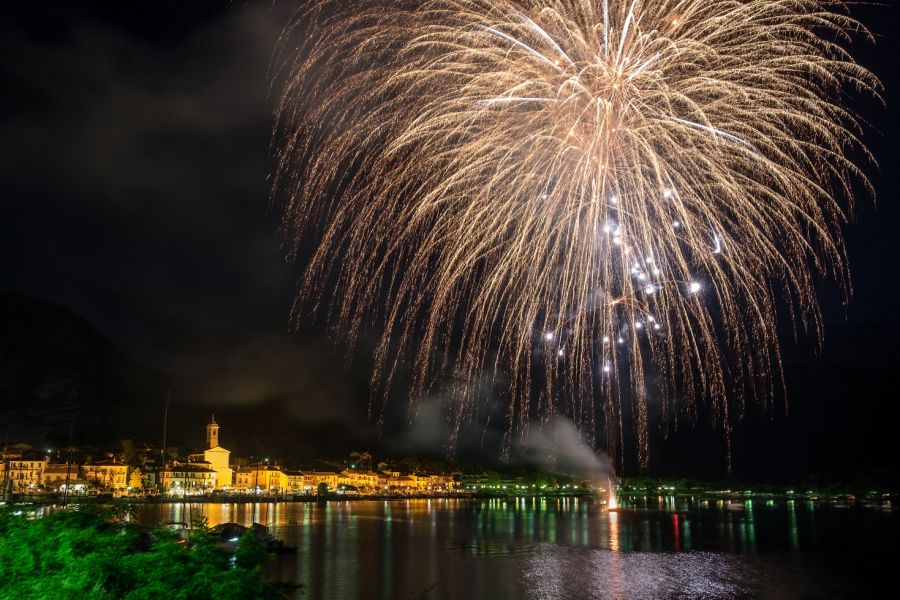
Feriolo
Picturesque fishing village, it was an important commercial center and place of processing and embarkation of the famous...
Discover more
Park and beach of Villa Fedora
In Baveno stands Villa Fedora, immersed in the coolness of the Municipal Park. Nineteenth-century residence witness of...
Discover more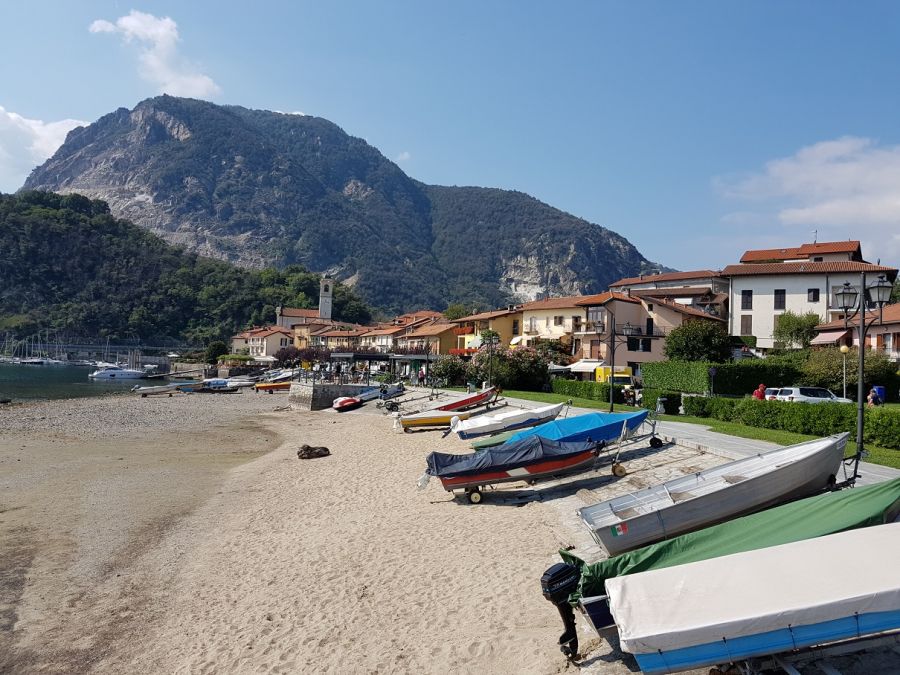
Baveno and Feriolo’s beaches
Relax on a bench in a green park or admire the lake landscape lying on a beach until sunset: parks and beaches are the...
Discover more